
Road Tax Coverage For Malaysia Entry Requirements
Rental Car Collection Checklist
January 19, 2026Singapore Night Driving: Tips for Rental Beginners
January 19, 2026
Driving a rental car from Singapore to Malaysia requires specific documentation, an active Vehicle Entry Permit, and insurance that covers cross-border use. Get any of these wrong at the checkpoint and you’ll face a fine, a turn-around, or both.
This guide covers what road tax verification, VEP, driver papers, insurance scope, and border procedures look like in practice for a rental.
Road Tax Verification for Cross-Border Rentals
Road tax is mandatory for any vehicle entering Malaysia. Reputable Singapore rental companies maintain current road tax across their cross-border fleet.
When you collect the car, confirm two things: the road tax is valid for your full trip duration, and you have printed proof in the glove box. Officers occasionally ask. Most don’t, but the document needs to be there.
Vehicle Entry Permit (VEP) Essentials
Since July 2025, every foreign-registered vehicle entering Malaysia needs a VEP with an activated RFID tag. The permit is valid for five years and is issued through Malaysia’s Road Transport Department portal.
Rental companies register their cross-border fleet on the VEP portal and install RFID tags on each vehicle. When you book a Malaysia-eligible rental, ask the company to confirm the specific car is VEP-ready and provide documentation showing its VEP status.
The penalties matter
Driving into Malaysia without a valid VEP triggers an RM300 fine (roughly S$91). You cannot exit Malaysia without paying. Refusal escalates to RM2,000 or six months in prison. Entry can be denied outright at the checkpoint if VEP status fails to scan.
Driver Documentation at the Border
Your passport must have at least six months of validity beyond your travel dates. Immigration enforces this strictly.
Singapore driving licence holders staying under 90 days do not need an International Driving Permit. Foreign nationals holding non-Singapore licences should verify their position with the rental company and Malaysian authorities before driving.
The rental agreement is the third document officers may check. It must explicitly authorise Malaysia travel and name all drivers. Carry a physical copy. Some immigration officers won’t accept a phone screen.
Insurance Coverage for Malaysia
A standard Singapore-only rental insurance policy does not extend to Malaysia. You need explicit Peninsular Malaysia coverage for both third-party liability and comprehensive (theft, collision, damage).
Before driving off, ask for the insurance certificate. Read the policy scope. Confirm:
- Coverage explicitly extends to Peninsular Malaysia
- Excess amounts and exclusion list (unauthorised drivers is the most common exclusion)
- Whether coverage extends beyond Johor or stops at the state boundary
Some cross-border packages cap coverage at Johor. If your trip ends in Kuala Lumpur or Penang, that limit is a problem.
Border Crossing Procedures
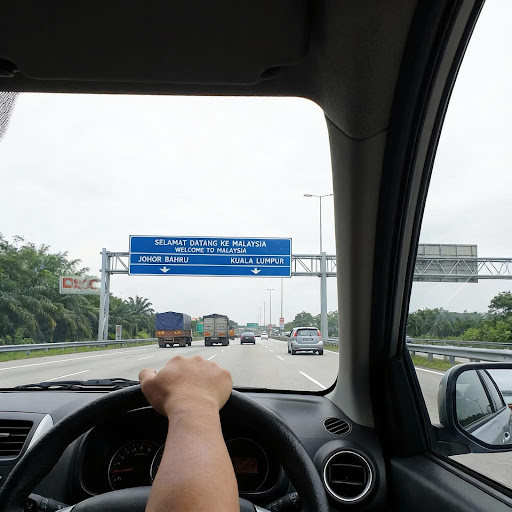
Woodlands Checkpoint runs 24 hours and handles the bulk of traffic. Tuas Second Link is further from the city but consistently lighter.
At Woodlands, follow Malaysia-bound lanes with your documents in hand. Clear Singapore immigration first, then proceed to the Malaysian side where the VEP RFID tag is scanned automatically. Stay in the vehicle through Singapore clearance.
Avoid weekday mornings between 7 and 10 AM, Friday evenings, and Sunday returns. These are the worst windows. If you’re crossing during any of these, build in an extra 45 to 90 minutes of buffer.
Choosing the Right Rental for Your Malaysia Trip
Vehicle choice changes the experience more than people expect. The right car depends on trip length, passenger count, and luggage volume.
Short Johor Bahru day trips
Short trips for shopping at Mid Valley Southkey or dining at JB Town work fine with a saloon car like a Toyota Vios or Honda Jazz. Standard VEP and road tax documentation apply.
Longer drives to Kuala Lumpur, Melaka, or Penang
Extended journeys benefit from a larger sedan or SUV for highway stability and luggage room. Confirm your insurance policy covers the full intended distance before you book.
Family or group travel
A 7 seater MPV for family Malaysia trips changes the maths entirely. Three rows of seats, full boot space behind the third row even when occupied, and rear sliding doors that work in tight Malaysian parking. For families of four to seven travelling with luggage, an MPV is almost always the right call over splitting into two saloons or cramming a five-seater.
Booking the cross-border MPV in advance also matters because the rentable Malaysia-eligible MPV fleet is smaller than the standard sedan fleet. Last-minute requests during school holidays often come back unavailable.
Common Pitfalls and How to Avoid Them
Peak hour delays.
Border congestion peaks on Singapore school holidays, public holidays, weekday rush, and any Friday after 5 PM. Cross at off-peak windows when possible.
Traffic violations linked to VEP.
The VEP system traces every Malaysian speeding, parking, or toll violation back to the registered vehicle. Rental companies pass these charges to your account with administrative fees. Drive carefully and respect posted limits. Malaysian highway police use plain unmarked cars.
Insufficient eWallet balance.
The RM20 Malaysia road charge is auto-deducted from your Touch ‘n Go eWallet on each entry. Tolls on the North-South Expressway also deduct automatically. Top up the eWallet before the trip and check the balance at the start of each driving day.
Costs Beyond the Base Daily Rate
Cross-border rental packages typically add S$50 to S$100 per day on top of the standard daily rate. This surcharge covers VEP compliance, insurance extension, and the administrative work of preparing the vehicle for Malaysia entry.
The RM20 road charge per entry is paid separately through your Touch ‘n Go eWallet. Toll fees on the North-South Expressway also come out of the eWallet.
For a five-day Singapore-KL trip in a 7-seater MPV, expect the cross-border surcharge alone to add S$250 to S$500 to your bill on top of the base rental.
Conclusion
Cross-border driving to Malaysia comes down to five checks: valid road tax, activated VEP with RFID, driver documents, insurance scoped to Peninsular Malaysia (or further if you’re going beyond Johor), and the right vehicle for the trip type.
A rental company with an established cross-border fleet handles most of this on the back end, but the verification at pickup is still your job. Take five minutes at collection to confirm the documents and the insurance scope. It saves hours at the checkpoint.
Planning a Malaysia drive? Our company handles VEP-ready vehicles across saloon, SUV, and MPV categories for cross-border bookings.