
Rental Car Accident What To Do?
Pet-Friendly Car Rentals: Questions to Ask
January 19, 2026Rental Car Collection Checklist
January 19, 2026A rental car accident in Singapore creates two problems at the same time: managing the scene itself, and protecting your rental insurance position. Mishandle either and you risk personal liability that can run into tens of thousands of dollars. The S$2,000 to S$3,500 standard excess on most Singapore rentals only applies if you follow the reporting procedure correctly. Skip a step and the policy may not respond at all. Knowing how self drive car rental insurance actually works in Singapore matters before you need it, not after.
This guide covers the procedure from the moment of impact through to claim resolution.
Immediate Safety Steps After an Accident
Three things matter in the first 60 seconds.
Check for injuries
Yours, your passengers, the other vehicle’s occupants, any pedestrians or cyclists. Do not move anyone with suspected spinal or head injuries. Call 995 for emergency medical services if injuries are apparent.
Activate hazard lights
This warns approaching traffic and reduces the chance of a secondary collision, particularly on expressways.
Photograph before moving anything
If the cars are blocking traffic and there are no serious injuries, you can move them to the roadside, but only after capturing the original positions. Take at least 4 to 6 photos showing both vehicles, the road context, and any street signs or lane markings that establish position.
When to Call the Police vs Exchange Information
Singapore law requires police notification in specific scenarios. Call 999 immediately if your accident involves:
- Fatalities or injuries requiring hospital attention
- Hit-and-run by the other driver
- Damage to public property (traffic lights, signs, railings, barriers)
- Government vehicles or foreign-registered vehicles
- Cyclists or pedestrians
- Suspected drunk driving by any party
For minor accidents with no injuries and only private vehicle damage, police attendance is not required. Exchange information with the other driver and proceed to your rental company’s reporting centre.
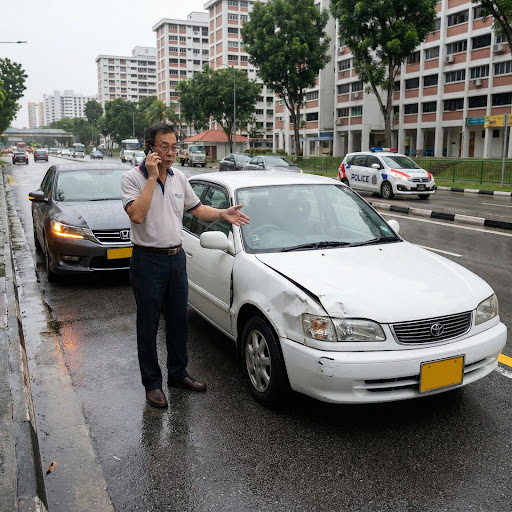
Documenting the Scene Properly
The quality of your documentation usually determines the outcome of disputed claims.
Photograph thoroughly
Capture wide shots showing both vehicles in position. Take close-ups of all damage on both cars. Get the licence plates clearly. Photograph the road surface (including any skid marks), surrounding traffic signs, weather conditions, and the time/date stamp if your phone shows it.
Exchange the right information with the other driver
Full name, NRIC or FIN, contact number, vehicle plate number, insurance company name, and policy number. Photograph their driving licence (both sides) and their identification.
Get witness contacts
If pedestrians, other drivers, or shop staff saw the incident, get their names and phone numbers. Independent witnesses become valuable when liability is disputed later.
Why You Should Never Admit Fault at the Scene
Singapore insurance policies routinely include a clause that voids coverage if the insured driver admits liability without insurer consent. This isn’t bureaucratic small print. Saying “I’m sorry” or “that was my fault” can be enough to give the other party’s insurer grounds to deny payment from your side.
Keep interactions factual. State that you’ll report the incident through your rental company’s standard procedure and that the insurance companies will determine fault from the evidence. Avoid arguments. Reject any offer of private settlement at the scene. These usually favour the party making the offer and may invalidate your insurance claim.
If the other driver becomes aggressive or attempts to pressure you into an admission, leave that interaction and call your rental company’s hotline.
Reporting to Your Rental Company Within 24 Hours
This is the single most important step after the scene is secured. Singapore traffic regulations require accident reporting within 24 hours regardless of severity.
Call your rental company’s emergency line as soon as the scene is safe. They are the registered vehicle owner and hold primary insurance. They will direct you to:
- Their designated accident reporting centre (different for each rental provider)
- The required documentation (rental agreement, driving licence, NRIC, scene photos, other driver’s details)
- The GIA-compliant accident report form
Bring everything to the reporting centre within the 24-hour window. The official report initiates the insurance claim and establishes your compliance with the policy terms. Delay past 24 hours is the most common reason claims get rejected.
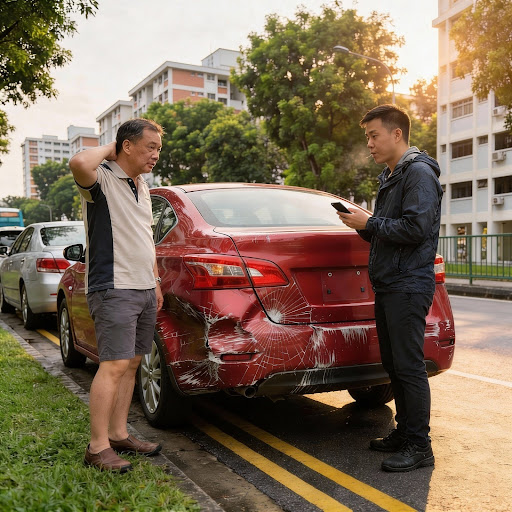
Understanding Your Rental Insurance Coverage
Singapore rental insurance has three layers, and they don’t all work the same way.
Third-party liability
Covers your legal responsibility for injuries or property damage to others. This is mandatory and built into every self drive car rental Singapore agreement. Coverage typically extends to S$5 million for third-party injury claims, which is the Singapore statutory minimum. This layer protects you from being sued personally for the other party’s damages.
Collision Damage Waiver (CDW)
Limits your financial responsibility for damage to the rental vehicle itself. Without CDW, you pay for the full repair cost. With standard CDW, you pay only the excess (typically S$2,000 to S$3,500) and the insurer covers the rest. Some rental companies offer excess waivers or top-up products at S$15 to S$25 per day that reduce or eliminate the excess.
Personal Accident coverage
Covers medical expenses for you and your passengers in case of injury. Coverage levels vary by provider; check your specific rental agreement.
Critical exclusions to know
Standard rental insurance does NOT cover damage caused by unauthorised drivers (anyone not named on the rental agreement), driving under the influence of alcohol or drugs, racing or reckless driving, off-road driving outside permitted areas, or accidents during use of the vehicle for unauthorised purposes (paid hire, deliveries, etc).
Your GIA (General Insurance Association) report becomes the foundation document for the entire claim process.
What Happens After You File the Claim
The insurance process moves in stages.
Liability assessment
Both insurers review scene photos, statements, police reports if any, and witness accounts. They negotiate liability split (e.g., 80-20, 50-50, or full fault).
Vehicle repair
The rental company sends the vehicle to an approved workshop. You don’t choose the workshop. The repair invoice goes to the insurer.
Excess payment
You pay the excess (S$2,000 to S$3,500 typical) to the rental company. This is non-negotiable under standard CDW terms.
Third-party claims
If the other party makes a claim against you, your third-party liability layer responds up to policy limits. Don’t communicate directly with the other party’s insurer or solicitor. Direct all queries to your rental company and insurer.
Resolution timeline
Straightforward claims resolve in 4 to 8 weeks. Disputed liability or significant injury claims can take 6 to 12 months or longer.
Consequences of Not Reporting on Time
Failing to report within the required window triggers several consequences:
- Full claim denial (you pay all repair costs personally)
- Loss of no-claim discount on future rentals
- Possible blacklist from the rental company and its sister entities
- Personal liability for any third-party claims
- Traffic violation summons under Singapore’s reporting laws
Some rental companies share customer history through industry channels. A serious unreported incident can affect your ability to rent from other Singapore providers.
Pre-Rental Inspection: The Best Insurance
Most accident disputes start before the accident.
Walk around the car with the rental staff at collection. Photograph every existing scratch, dent, paint chip, and interior mark. Submit these photos in writing to the rental company before driving off. This baseline documentation protects you from being charged for pre-existing damage at return.
Check that lights, signals, brakes, wipers, and tyres are functional. Verify the spare tyre is present and inflated. Confirm the road tax disc is current and the insurance certificate is in the glove box.
A pre-rental inspection takes 5 to 10 minutes. It eliminates the most common dispute category in rental contracts.
Conclusion
A rental car accident in Singapore is recoverable as long as the procedure is followed: safety first, document everything, never admit fault, report within 24 hours. Skip any of these and the financial exposure shifts from the insurance company to you personally.
For drivers booking weekly or monthly rentals, confirming the short term car rental cover at the point of booking (rather than at the point of incident) saves significant trouble. Ask about CDW excess, optional excess waivers, third-party limits, and the specific accident reporting hotline for your provider.


